Municipal & commercial solid waste
Planning and managed service arrangements for public agencies, facility operators, and commercial waste streams.
Explore solution ↗Municipal, commercial, and transfer-station-to-landfill transportation solutions, built around the waste stream, the contract, and the right hauling capacity.
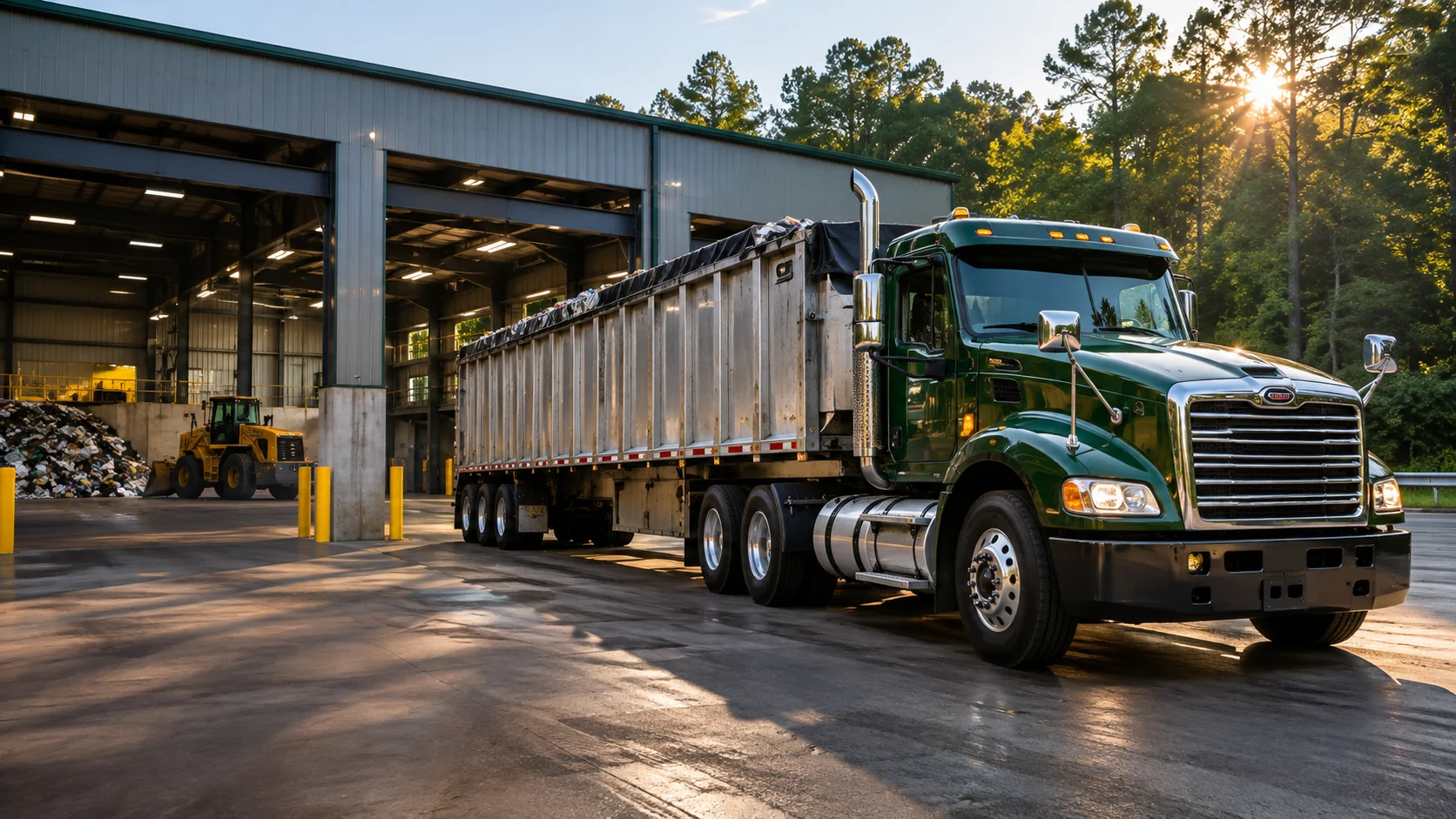
From recurring transportation requirements to qualified hauling capacity, we build around the contract—not the other way around.
Planning and managed service arrangements for public agencies, facility operators, and commercial waste streams.
Explore solution ↗Transfer-to-disposal transportation strategies, including power-only and facility-compatible trailer capacity.
Explore solution ↗Contract administration, carrier coordination, reporting workflows, and accountable service oversight.
Explore solution ↗Waste-stream-specific arrangements for recycling, nonhazardous C&D, and compatible transport equipment.
Explore solution ↗Developing relationships with qualified independent trucking companies and equipment operators across Georgia.
Explore solution ↗Existing debris response and recovery services remain part of our broader portfolio, not our primary focus.
Explore solution ↗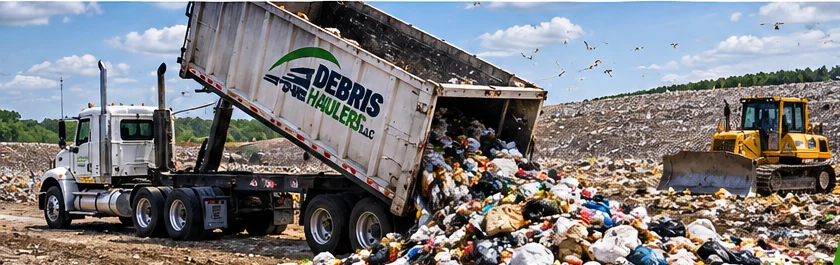
One waste movement depends on the right trailer, permitted destination, loading schedule, reliable carrier, accurate weight tickets, and accountable costs. We evaluate the entire operation—not just the driving miles.
Explore transfer haulingWe believe the best waste transportation solution starts by understanding who controls the material, the contract, the trucks, and the operating costs. The strongest model may be dedicated carrier capacity, facility-owned trailers, or a carefully structured management agreement.
Waste operations depend on tight cycle times, reliable capacity, compatible equipment, accurate weight tickets, and disciplined cost control. Our approach is to solve those problems before they become contract failures.
Scope, controls, and economics before equipment.
Qualification and fit before assigning capacity.
Metro Atlanta relationships, then expansion.
Cycle time, loads, disposal access, and scheduling.
Cost per load, fuel, deadhead, wait time, and risk.
Customer terms, subcontract consent, and reporting.
Equipment and operator qualifications for each job.
We're developing relationships with established, appropriately authorized hauling companies and independent operators for potential contract-specific opportunities throughout Georgia.
Carrier opportunities ↗Every project starts with practical, transparent scoping.
No. Our model evaluates appropriately qualified operators, partner capacity, rental arrangements, and other structures as a contract requires. Do not assume equipment ownership or confirmed availability without a project agreement.
We initially focus on Metro Atlanta and surrounding Georgia counties, with statewide opportunities evaluated based on carrier capacity, facility access, and project economics.
We welcome discussions with agencies, prime contractors, transfer stations, and commercial operators. Any actual service commitment depends on required registrations, procurement rules, subcontract approvals, and documented capacity.
Yes. Storm and disaster debris work remains a secondary service line while solid-waste management and transportation are the primary business focus.
Tell us the waste stream, facility locations, equipment needs, and operating schedule.